

Blastomycosis: Making A Difference in Primary and Emergency Medicine/Urgent Care

Why Care About Blastomycosis?

  • Blastomycosis may cause community-acquired pneumonia (CAP) that is difficult to distinguish from viral or bacterial CAP.
  • The diagnosis is often missed. Up to 2.5 courses of antibiotics are given on average before blastomycosis is diagnosed.
  • Blastomycosis can lead to serious respiratory problems or disseminated disease—approximately 8-10% (and in some years upwards of 17%) of patients hospitalized for blastomycosis die from the infection.
  • A recent study conducted in a Medicare population found that the blastomycosis rate exceeded 50 cases/100 000 person-years in 547 US counties. Given the acceptability of testing for Legionnaire’s disease (approximately 2 cases/100 000 person-years) and pulmonary embolism (approximately 112 cases/100 000 person-years), testing for blastomycosis is well justified in affected regions.

Skin lesion caused by Blastomyces dermatitidis on the mediodorsal aspect of the hand of a hospitalized patient. Courtesy of CDC.

What Is It?

Blastomycosis is an invasive fungal infection caused by the genus Blastomyces. While blastomycosis often causes CAP, in some cases, skin lesions may be a clue to the diagnosis. Blastomycosis can disseminate if left untreated, leading to high morbidity and potential mortality.

Where Does it Occur?

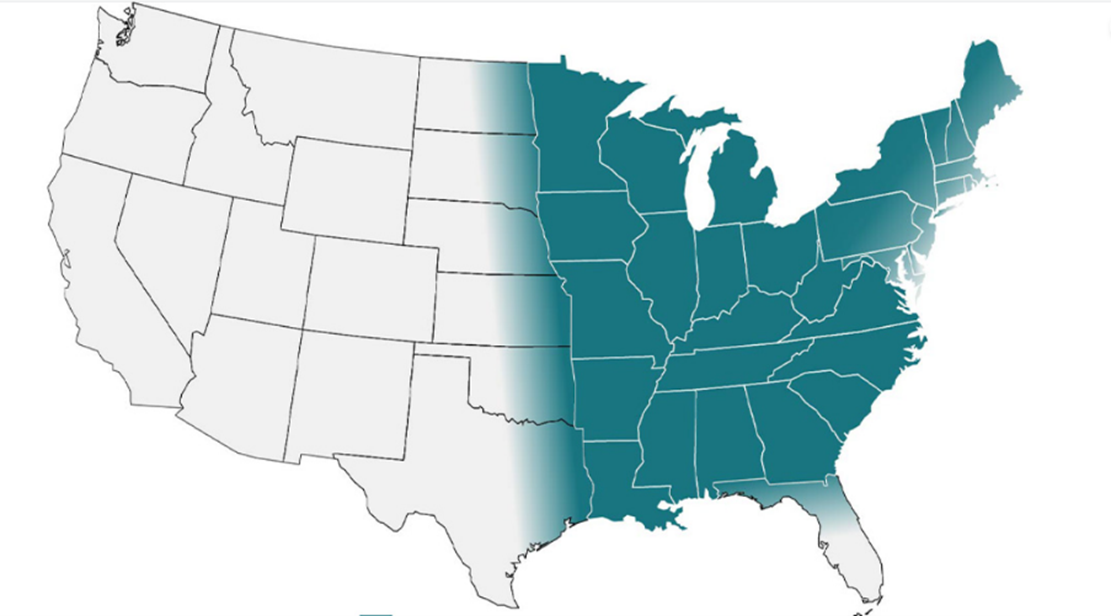
Regions affected by Blastomyces are shown in the two maps. The dark green areas are where Blastomyces is more likely to live, while the light green areas show the potential range for this pathogen. But the range of Blastomyces is expanding, so you may see cases outside this endemic area.

Approximate range of Blastomyces in the United States. Courtesy of CDC.

Approximate range of Blastomyces in the world. Courtesy of CDC.


Outbreak Potential: From 2022 to 2023, an outbreak of blastomycosis occurred among papermill workers in Michigan. 162 cases were identified.

When Should I Test?

Consider testing for blastomycosis in a patient with CAP who has lived in or recently traveled to an endemic area (see map above) AND

  • The CAP is of unknown etiology and has not responded to a course of empiric antibiotics OR
  • The patient also has skin lesions OR
  • The patient is linked to a known blastomycosis outbreak.

Clinical Pearl:

Dogs are particularly predisposed to blastomycosis. They may be 10 times more likely to get blastomycosis than humans. A sick patient who has a sick dog with a shared exposure (eg, hunting, ground excavation, etc.) could be a diagnostic clue.

How Can I Diagnose It?

  • Blastomyces antigen tests cross-react with Histoplasma. Definitive identification requires additional testing, including serology, culture, histopathology, and/or molecular methods. Results should be correlated with clinical presentation and exposure history.
  • Consider testing via enzyme immunoassay urine antigen testing. Details about testing and interpretation are shown in the clinical testing algorithm.
  • If you don’t know where to send the test, see List of Fungal Disease Reference Labs.

CHECK OUT…

PCPs Making a Difference in Blastomycosis

Learn about best practices for diagnosing blastomycosis by Dr James S Montana, who practices in northern Minnesota, where Blastomyces is prevalent.

Click Here to Download a PDF Transcript of the Video


Patient Experience With Blastomycosis

Watch Darrell’s story about his treatment journey with blastomycosis.

Faces of Fungal Infection Videos – Fungus Education Hub

Need Help? Get a Clinical Consult!

Healthcare providers can call 404-639-5168 or email fungalconsult@cdc.gov for consultation on diagnosis or treatment for suspected or confirmed fungal diseases.

RESOURCES

  • Alpern JD, Bahr NC, Vazquez-Benitez G, Boulware DR, Sellman JS, Sarosi GA. Diagnostic delay and antibiotic overuse in acute pulmonary blastomycosis. Open Forum Infect Dis. 2016; 3(2):ofw078. doi:10.1093/ofid/ofw078
  • Centers for Disease Control and Prevention. Data and statistics on blastomycosis. Updated November 15, 2023. Accessed June 19, 2025. https://www.cdc.gov/fungal/diseases/blastomycosis/statistics.html
  • Centers for Disease Control and Prevention. Testing algorithm for blastomycosis. Updated April 24, 2004. Accessed June 19, 2025. https://www.cdc.gov/blastomycosis/hcp/testing-algorithm/index.html
  • Mazi PB, Sahrmann JM, Olsen MA, et al. The geographic distribution of dimorphic mycoses in the United States for the modern era. Clin Infect Dis. 2023;76(7):1295–1301. doi:10.1093/cid/ciac882
  • Smith DJ, Free RJ, Thompson GR 3rd, et al. Clinical testing guidance for coccidioidomycosis, histoplasmosis, and blastomycosis in patients with community-acquired pneumonia for primary and urgent care providers. Clin Infect Dis. 2024;78(6):1559-1563. doi:10.1093/cid/ciad619


This educational initiative was funded in part by a cooperative agreement with the Centers for Disease Control and Prevention (CDC-RFA-CK20-2003) to the University of Alabama at Birmingham. The University of Alabama at Birmingham is collaborating with the Mycoses Study Group Education & Research Consortium and Terranova Medica, LLC, on this initiative. The Centers for Disease Control and Prevention is an agency within the Department of Health and Human Services (HHS). The contents of this resource center do not necessarily represent the policy of the CDC or HHS and should not be considered an endorsement by the Federal Government.